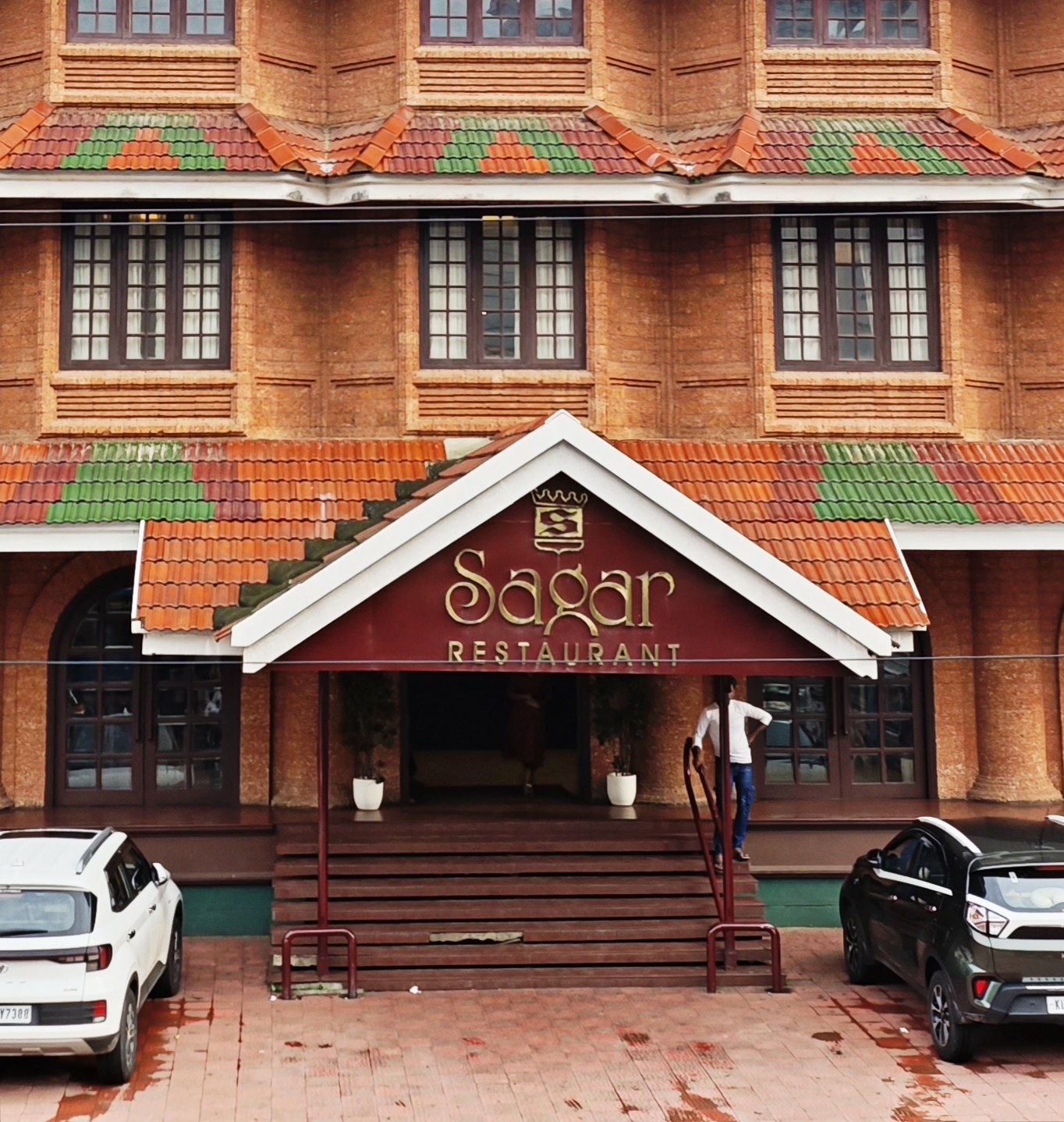
Essay No. 01 · The house
A single room.
Three pots.
One ledger.
Volume 48 · Issue 1
Filed · Calicut, Kerala
Word count · 612
Read time · 4 min
In 1956 the road outside was not yet called Mavoor Road. The
mofussil bus stand was a clearing where buses parked between
sand pits, and the trader's market spilled out onto whatever
tarmac the municipality had managed that month. In the gap
between the two, Hamza Haji opened a single-room eatery —
three iron pots, a slate menu, and a copper ledger he kept
under the counter.
The first dish on the slate was beef curry with parotta. The
second was tea. There was no third for almost a year.
By 1972 the eatery had grown into Parivar Hotel — a proper
three-room operation with a tandoor and a separate dum
station for the biryani. The menu was still small but the
kitchen had learned how to feed a wedding party of a hundred
without raising its voice. The reputation that would become
Sagar's was already half-formed: heavy on spice, generous
with ghee, never apologetic about portion size.
In 1978 the family took the lease on Poyyil Towers — directly
opposite the still-new bus stand and a hundred metres from
what would, decades later, become Big Bazaar. They re-named
it Sagar. It served biryani to a full house that first night —
and has not closed for a single day since.
01
On the lineage
A single-room eatery in 1956, Parivar Hotel by 1972, and
Sagar from 1978 — all on the same stretch of Mavoor Road.
The Mavoor Road that exists in the family's memory has very
little to do with the Mavoor Road of present-day Google Maps.
In 1978 the road had two streetlights, three bicycle repair
stalls, and a single corner soda fountain. The bus stand had
just been moved across the road from its original site. The
buses themselves were KSRTC's vintage Tata Mercedes-Benz
fleet — the ones that ran on a dual-fuel system and were
forever spitting black smoke into the breakfast crowd.
What this means for the kitchen is that, for a long time, the
customer profile was specific and unmoving — rickshaw
drivers, bus conductors, traders walking between the
mofussil and the railway station, and a small but loyal
cluster of office workers from the Mavoor Road Telephone
Exchange. The dishes that survived were the dishes those
people kept coming back for: parotta, biryani, fish curry,
and chai. The dishes that didn't survive were the ones the
kitchen thought might be clever — a brief experiment with
North Indian chaat in 1989, a Cantonese chow mein that ran
for exactly six months in 1993.
02
On the kitchen
Many of the cooks have worked the same stations — tawa,
dum-pot, tandoor — for the better part of their careers.
What survived, and what made Sagar a Calicut institution
rather than just another Mavoor Road eatery, was the way the
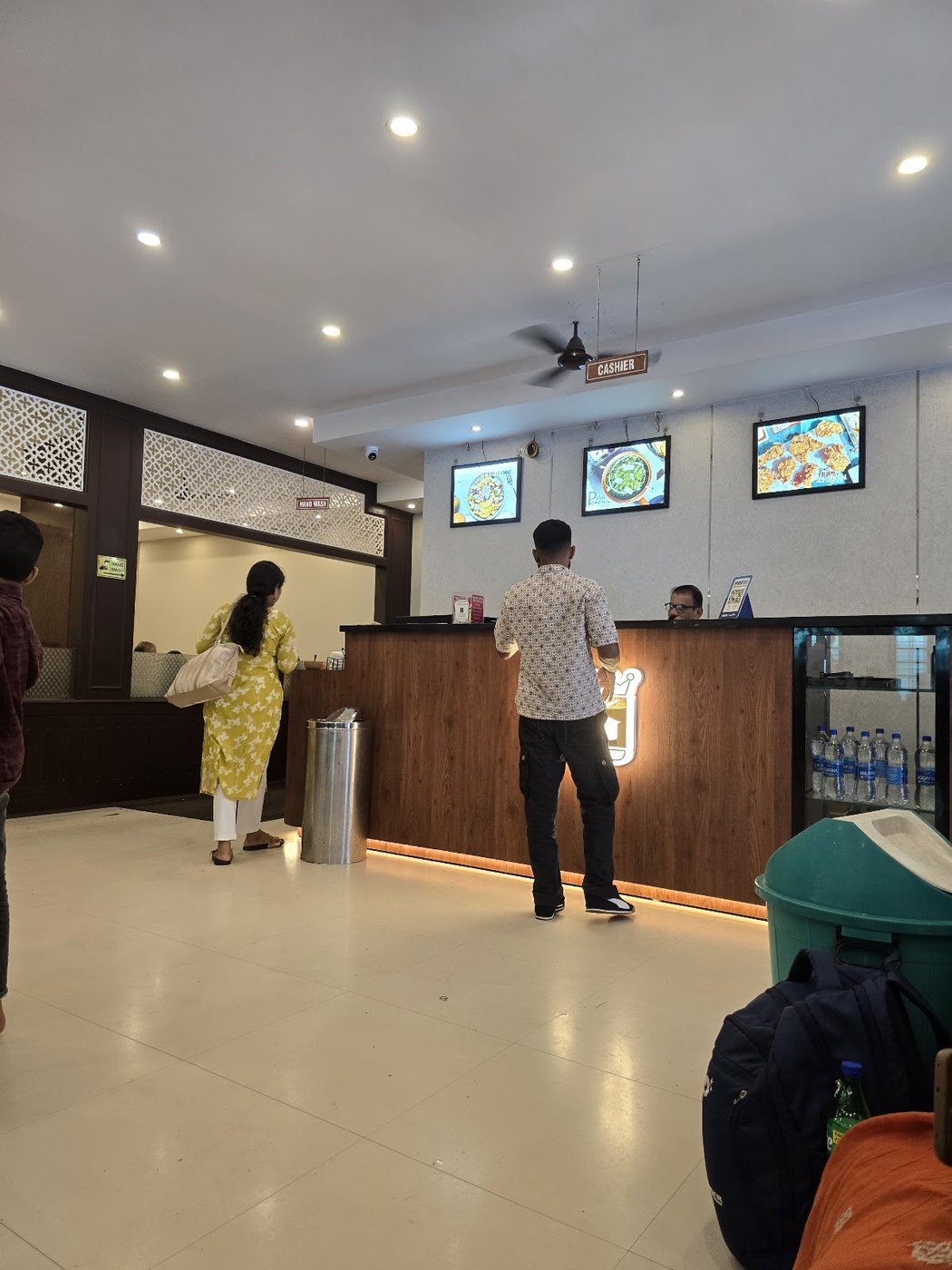
kitchen treated its non-glamorous regulars. There was no
air-conditioning. There were no waiters in uniform. There
were no candles, ever, even when the city had power cuts. But
the biryani that left the dum-pot at noon was the same
biryani at every plate, every day, for forty-eight years —
and the parotta that came off the tawa at seven was made by
someone who had been making it for thirty.
That consistency is the entire pitch. It is, more or less,
everything Sagar has ever sold. And it is why the kitchen,
three generations on, has not been tempted to franchise,
rebrand, expand vertically, or open a "cloud kitchen" in
Bangalore. The Mavoor Road location and its sister branch on
Indira Gandhi Road are both within walking distance of where
Hamza Haji cooked his first beef curry. They have, between
them, exactly the kitchen capacity the family thinks they
can manage without anyone slipping.
When the Onmanorama food desk visited in October 2022 and
described the parottas as "flaky yet soft," the line outside
doubled within a fortnight. The kitchen's response was not to
add seating, raise prices, or hire more staff. Their response
was, as the kitchen put it, "to make sure the parotta stayed
the same."
That, in two words, is Sagar's strategy: stay the same.